
Coco connects cinema, music, craft and cultural interest. Explore its box-office history and the limits of claims about local economic impact.
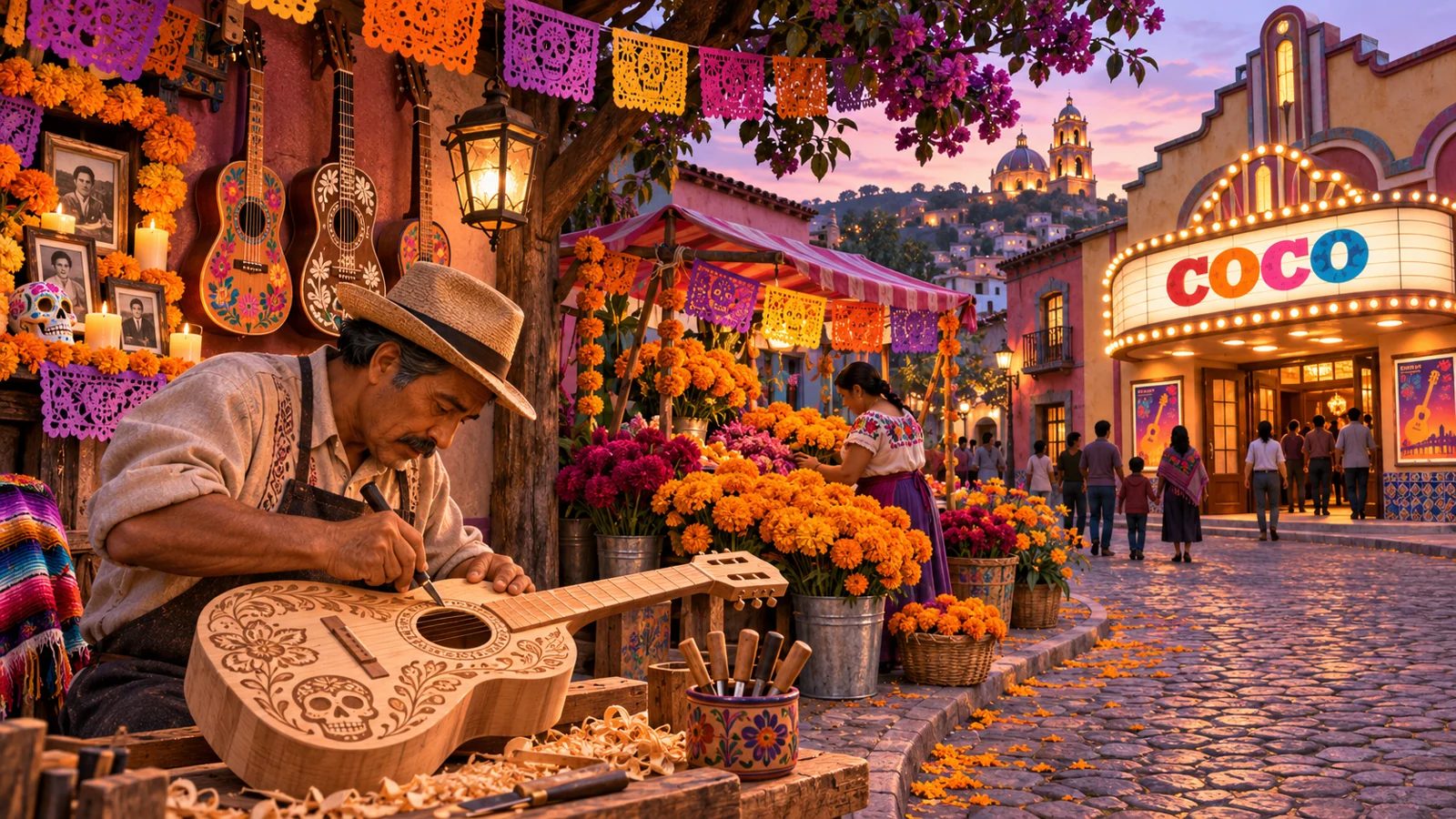
How the pieces connect
- 1DiscoverA story sparks interest
- 2ExploreVisitors seek music and craft
- 3PurchaseA business delivers value
- 4ReturnQuality builds another visit
A film can open a door to a much older tradition
Pixar’s Coco introduced many international viewers to a story centered on family, memory and Día de Muertos. The film did not create the tradition. Its commercial significance lies in the way a widely distributed story can draw attention toward music, craft, food and places that already have their own histories.
For merchants, that attention can create an opening for thoughtful products and experiences. It is not evidence that every flower sale, restaurant visit or trip associated with Día de Muertos was caused by the film.
Separate the film’s receipts from the wider economy
In a November 22, 2017 report, Disney said Coco had reached 965 million pesos in Mexico and become the country’s highest-grossing film at that point. That is a dated milestone, not a claim about its ranking today. Box Office Mojo lists more than $814 million worldwide for the film’s original-release entry. [Source] [Source]
Box-office gross measures ticket receipts. It is not studio profit, and it is not a measure of the film’s effect on tourism, artisan income or restaurant spending. Those questions require different evidence. A large theatrical total can establish commercial reach without providing a multiplier for every business connected to the subject.
From business issue to practical action
| Focus | What can go wrong | Practical response |
|---|---|---|
| Film receipts | Theatrical ticket revenue | Not studio profit or local tourism impact |
| Merchant sales | Purchases at a specific business | Not proof that every sale was caused by the film |
| Cultural experience | Craft, music, food and learning | Needs accurate provenance and permissions |
Editorial operating guide based on the issues discussed in this story.
The creative value chain extends beyond a ticket
A successful animated film involves storytelling, design, performance, music, production and distribution. Around the audience experience sit theaters, food concessions, licensed merchandise and other services. These are different revenue streams with different costs and contractual arrangements.
A local cinema may benefit from an event screening, while a guitar maker or music teacher may receive inquiries from people inspired by the story. Those are plausible routes for attention to become commerce, not measured outcomes that can be assigned a universal dollar value.
Build an offer around genuine expertise
A restaurant can tell the story behind a family recipe. An artisan can demonstrate a technique and name the community or workshop where an item was made. A music business can introduce customers to instruments and teachers. The strongest offer is something the merchant can explain and deliver well.
Be precise when using a film connection. A cultural event is not automatically an official Coco event. Confirm the necessary permissions and commercial arrangements before using protected characters on merchandise or promoting a screening. Work with legitimate suppliers and keep the documentation with the purchase records.
Avoid the souvenir-only view of culture
UNESCO’s description of Día de Muertos emphasizes remembrance, family and community practices. A business that uses the occasion only as a colorful backdrop risks missing what gives it meaning. Give makers visible credit, pay collaborators as agreed and allow them to explain their own work. [Source]
For visitors, a useful purchase can carry a story about a person, material or tradition. Clear provenance and honest product descriptions matter more than suggesting an unsupported link to a film production or an official endorsement.
Measure the business you can actually observe
Track event attendance, conversion, average purchase, repeat visits and the cost of the offer. Ask customers how they heard about the business without treating every mention of Coco as proof of a sale caused by the film. Compare results with similar days and record what changed.
The practical lesson is that cultural attention can help people discover a business. Turning that interest into durable value still depends on quality, respectful storytelling, reliable payment and a customer experience worth returning to.
Check your merchant readiness
Select the items you have completed. The chart shows your checklist progress, not a risk score or approval prediction.
How MIDsource supports creative-business payments
For artisans and retailers turning cultural interest into product sales, reliable checkout matters alongside the work itself. MIDsource can help explore online checkout integrations and payment tokenization for supported repeat-payment arrangements. Payment services do not supply permission to use film characters or other protected material.
Sources and further reading
Sources checked November 11, 2026. Business implications are MIDsource editorial analysis. Historical actions and forecasts are identified by date.
- Disney: Coco’s November 2017 Mexico box-office milestone
- Box Office Mojo: Coco, original-release entry
- UNESCO: the tradition behind the film’s cultural setting