
How Día de Muertos supports florists, bakers, artisans, hospitality and neighborhood commerce—and how to read the economic estimates responsibly.
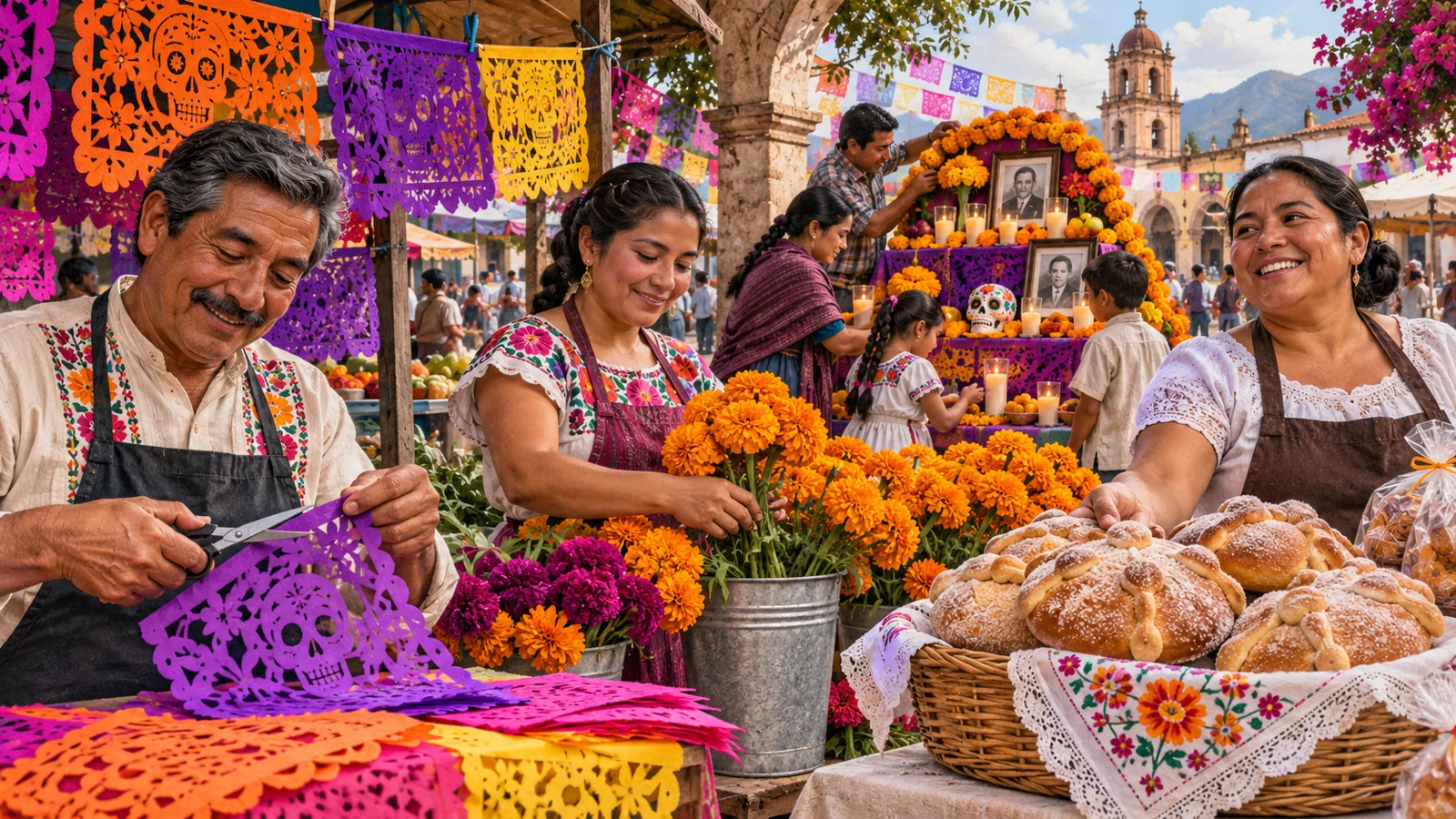
How the pieces connect
- 1Grow & makeFlowers, food and craft
- 2Bring to marketTransport and stall space
- 3Serve visitorsRetail and hospitality
- 4Pay locallySuppliers and collaborators
Día de Muertos: the projected spending window
Billions of Mexican pesos · Bars start at zero; full width = 55.
The 2026 forecast covers October 25–November 2. These figures are not business profit or an audited GDP measure.
View figures and source
| Period | Billions of Mexican pesos |
|---|---|
| 2025 comparison cited by CONCANACO | 49.5 |
| 2026 forecast | 53 |
An economy built around remembrance
Día de Muertos brings families and communities together to remember those who have died. Flowers, food, candles, handmade decorations and travel all have a place in that observance. The commercial activity matters, but it grows around a living cultural tradition rather than replacing it.
UNESCO describes the Indigenous festivity as commemorating the temporary return of deceased relatives and loved ones. Its cultural heritage recognition provides important context for merchants: this is not simply a Mexican version of Halloween or a seasonal costume theme. [Source]
What the spending estimate does—and does not—say
In its October 18, 2026 release, CONCANACO SERVYTUR projects 53 billion Mexican pesos in economic activity for October 25 through November 2, approximately 7% above the prior-year comparison cited in the release. The organization identifies commerce, services and tourism among the participating sectors. [Source]
That number is an industry forecast, not an audited total of completed purchases. It should not be described as business profit or a contribution to GDP. Nor should it automatically be added to separate hotel or tourism estimates, which may count some of the same spending.
From business issue to practical action
| Focus | What can go wrong | Practical response |
|---|---|---|
| Florists and bakers | Perishable stock and early purchasing | Use committed orders to plan quantities |
| Artisans | Time-intensive production | Agree on pricing, credit and delivery |
| Hospitality | Visitor timing and access | Publish clear hours and booking terms |
Editorial operating guide based on the issues discussed in this story.
The supply chain starts before the celebration
A flower seller’s busy weekend rests on earlier growing, transport and purchasing decisions. Bakers buy ingredients and schedule production before demand peaks. Artisans commit time to work that cannot always be reproduced quickly, while market vendors need the right mix of products and enough space to serve customers.
For small businesses, the calendar creates a working-capital challenge: money leaves before the busiest sales arrive. A practical plan distinguishes committed orders from hoped-for walk-in demand. Perishable flowers and baked goods need particularly careful quantities and pickup arrangements.
Where visitor spending reaches local businesses
Visitors may purchase meals, lodging, transport and locally made goods in addition to attending public celebrations. A useful business strategy makes those connections visible: accurate opening hours, clear directions, reliable bookings and information about nearby independent vendors.
Some spending is genuinely additional; some shifts from another day or location. A full hotel or crowded market alone does not establish the total net benefit to a city. Meaningful local analysis would compare actual receipts, employment and costs with an appropriate baseline, and account for the public services needed to support visitors.
Respect is part of the customer experience
Describe the origin and maker of an item accurately. Do not market factory-produced goods as handmade or imply that a commercial display represents every community’s practice. When a business collaborates with artisans, agree on pricing, credit, delivery dates and how the work will be used in promotional material.
Restaurants and shops can explain ingredients, craft and family traditions without turning remembrance into a sales gimmick. Pay attention to photography, private spaces and community guidance. A respectful experience helps visitors understand why the products and practices matter.
Keep the payment promise simple
Show prices clearly, confirm what a preorder includes and give customers a receipt they can retrieve. Market sellers using mobile terminals should check connectivity at the actual stall location. Hospitality businesses should make booking and cancellation terms easy to understand before payment.
After the celebration, separate gross receipts from expenses, unsold stock and outstanding supplier payments. The lasting economic value is easier to assess when businesses can see what remained locally and which relationships can continue beyond two busy days.
Check your merchant readiness
Select the items you have completed. The chart shows your checklist progress, not a risk score or approval prediction.
How MIDsource helps local merchants accept payments
Florists, bakeries and community-event vendors may collect payments online as well as in person. MIDsource offers merchant account services and online payment gateway options. Share whether you take advance orders, sell at an event or invoice customers so the discussion fits your business.
Sources and further reading
Sources checked November 11, 2026. Business implications are MIDsource editorial analysis. Historical actions and forecasts are identified by date.
- CONCANACO SERVYTUR: October 18, 2026 spending projection
- UNESCO: Indigenous festivity dedicated to the dead