

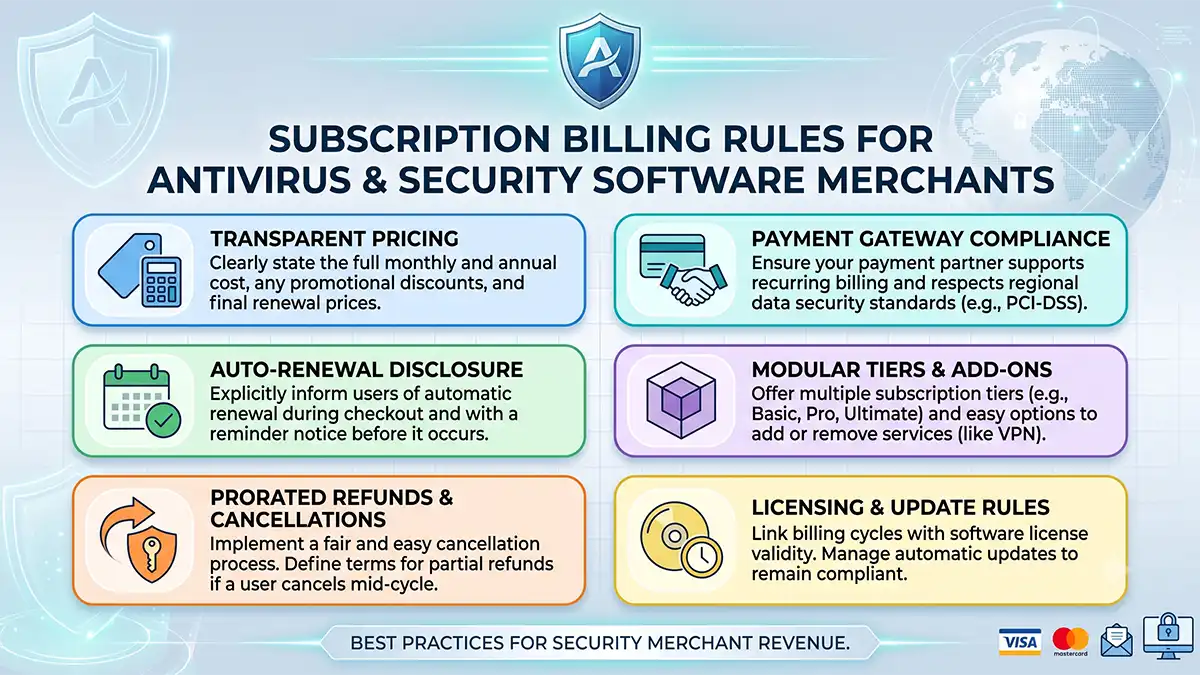
Subscription billing is the revenue engine for many antivirus and cybersecurity companies. It is also one of the first places processors look when evaluating risk.
Why Subscription Billing Gets Reviewed
Automatic renewals can create predictable revenue, but they also create customer memory problems. A cardholder may forget a renewal, miss a trial conversion, overlook the product name, or not recognize the billing descriptor on a statement.
Those situations often become friendly fraud. The customer may have authorized the purchase, but if the charge looks unfamiliar or support is difficult to reach, the issuing bank becomes the first call.
Customer Transparency Standards
- Show pricing clearly before checkout.
- Display renewal terms in plain language.
- Explain trial-to-paid conversion timing.
- Make cancellation procedures straightforward.
- Provide responsive support before and after billing.
- Confirm renewals with email receipts and account portal updates.
Billing Descriptors Matter
A confusing descriptor remains one of the leading causes of unauthorized disputes for software merchants. If the descriptor uses a holding company name or an abbreviation customers do not recognize, a legitimate renewal can look like fraud.
Cybersecurity merchants should use brand-recognizable descriptors whenever possible. When supported, adding a customer service phone number can reduce disputes because it gives the cardholder a direct path to the merchant instead of the bank.
| Billing Element | Risk When Weak | Stronger Practice |
|---|---|---|
| Renewal terms | Forgotten subscriptions and disputes | Visible terms plus advance reminder emails |
| Descriptor | Unrecognized transaction claims | Brand name plus support phone when possible |
| Cancellation | Bank dispute used as cancellation method | Self-service cancellation and fast support |
| Receipts | Customer cannot match charge to product | Immediate receipt with product, amount, and support links |
Renewal Communication That Reduces Disputes
Companies with lower dispute rates often send advance renewal reminders, renewal confirmation emails, receipts with support information, and account management links. The goal is to make the renewal feel expected, documented, and easy to resolve.
The language should be direct. Customers should understand when they will be charged, how much they will be charged, what product the charge covers, and how to cancel or request support.
Processor-Friendly Documentation
- Checkout screenshots showing price and renewal terms
- Terms of service and cancellation policy
- Sample renewal reminder email
- Sample renewal receipt
- Descriptor format and support phone visibility
- Support response process and refund workflow
Good subscription billing is not just a compliance exercise. It protects revenue, improves processor confidence, and lowers chargeback exposure. MIDsource can review your subscription billing flow before underwriting does.
Real Data: Why Subscription Transparency Matters
The FTC reported that complaints about negative-option and recurring subscription practices rose from an average of 42 per day in 2021 to nearly 70 per day in 2024. The agency's 2024 rulemaking was later vacated by the Eighth Circuit in July 2025, but the business lesson remains: unclear renewals and hard cancellations create customer frustration, refunds, disputes, and processor scrutiny.
FTC Complaint Trend
Approximate increase from 42 to 70 complaints per day.
Sources: FTC October 2024 release and July 2025 court coverage.
What This Means for Antivirus Subscription Billing
For security software merchants, the best practical response is to behave as though every subscription flow may be reviewed by a customer, a bank, and an underwriter. The checkout should disclose renewal timing, the confirmation email should repeat it, the descriptor should match the product brand, and cancellation should be easy enough that a customer does not use a chargeback as a cancellation tool.


